
Smart Strategies for Canadians to Tackle Credit Card Debt in 2026: A Step-by-Step Guide to Financial Freedom
Smart Strategies for Canadians to Tackle Credit Card Debt in 2026: A Step-by-Step Guide to Financial Freedom
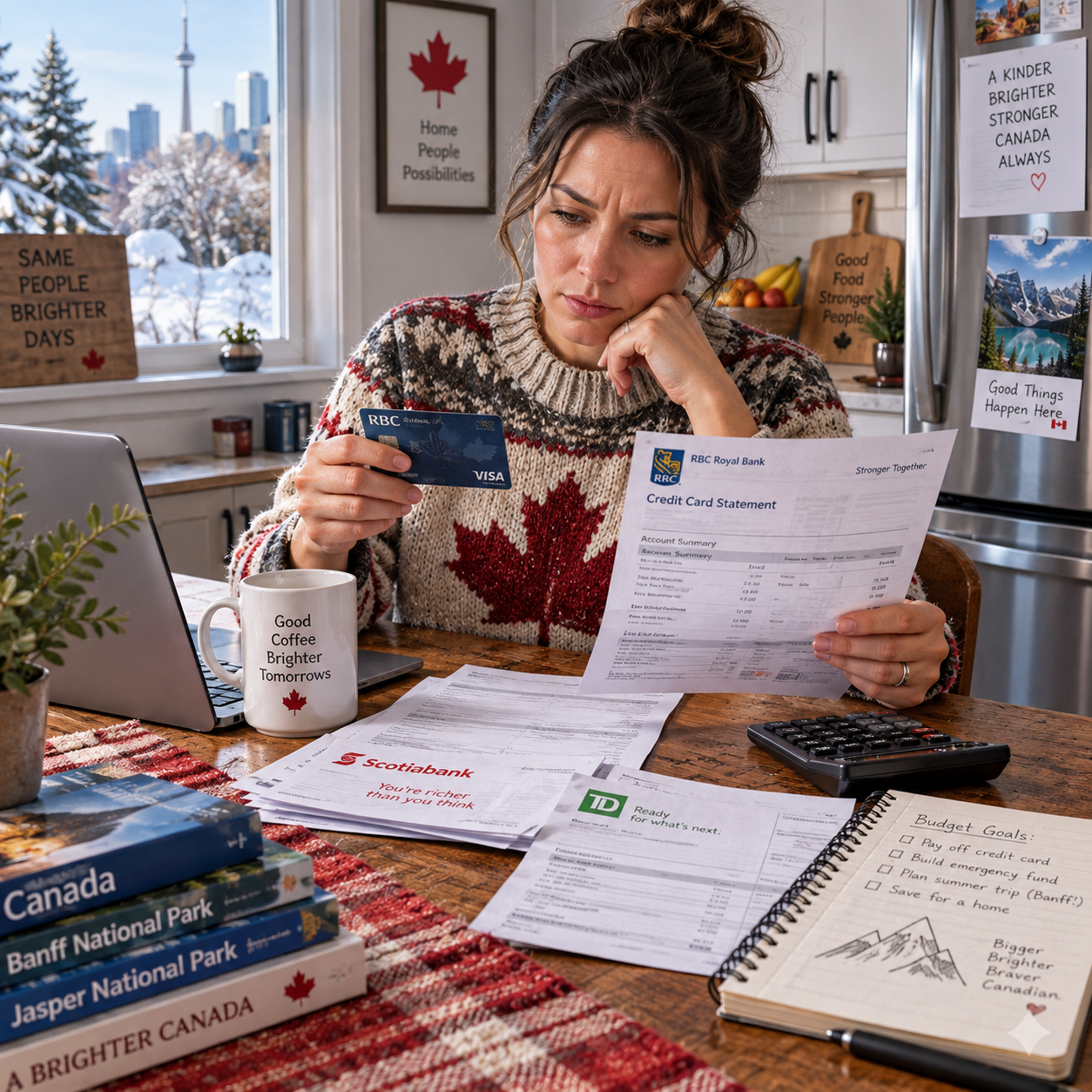
If you're staring at a stack of credit card statements right now wondering how things got this way, you're far from alone. I've talked to so many Canadians this year who feel like they're running on a treadmill—working hard, paying bills, and somehow still watching their balances creep upward. 2026 has been a strange year financially, and credit card debt has become one of those quiet stressors that sits in the back of everyone's mind.
Understanding Canada's Credit Card Debt Landscape in 2026
Let's be honest about where we stand. Average credit card balances across Canadian households have continued climbing, and with interest rates typically sitting between 19.99% and 24.99% APR, that debt compounds fast. Add in the post-holiday spending hangover from December, plus general inflationary pressure on groceries, gas, and housing, and it's easy to see why so many of us are carrying balances longer than we'd like.
What makes this particularly frustrating is that credit card debt doesn't discriminate—it affects young professionals just starting out, parents juggling household expenses, and even retirees trying to stretch fixed incomes. The urgency to tackle it head-on has never felt more real.
Why Credit Card Debt Feels Different in 2026
There's something uniquely challenging about this particular moment. Wages haven't kept pace with the rising cost of living, and for many Canadians, credit cards have shifted from a convenience to a necessity for covering everyday expenses like groceries and utility bills. That shift changes the psychology of debt—it's no longer just about impulse purchases; it's about survival spending, which makes traditional 'just spend less' advice feel almost tone-deaf.
Assessing Your Current Debt Situation
Before you can fix anything, you need to see the full picture clearly. This step feels tedious, I know, but it's the foundation everything else builds on. Grab every statement, every app notification, every 'you have a balance' email, and compile it all into one document or spreadsheet.
List each card, the outstanding balance, the interest rate, and the minimum monthly payment. Don't skip this step even if it feels uncomfortable—clarity is the first real move toward control. Many people avoid this exercise because facing the numbers feels overwhelming, but I promise the anxiety of not knowing is usually worse than the reality once it's written down.
Calculating Your True Debt-to-Income Ratio
Once you have your debts listed, divide your total monthly debt payments by your gross monthly income. This percentage—your debt-to-income ratio—matters enormously, both for your own planning and for how Canadian lenders view your financial health when you apply for mortgages, car loans, or even new credit cards down the road. Generally, staying under 36% is considered healthy, though many of us in 2026 are finding ourselves pushing past that threshold without even realizing it.

Choosing the Right Repayment Strategy
Now for the part everyone wants to know: how do you actually pay this stuff off? Two strategies dominate the conversation, and choosing between them often comes down to personality as much as math.
Debt Snowball Method Explained
The snowball method has you pay off your smallest balance first while making minimum payments on everything else. Once that smallest debt disappears, you roll that payment amount into the next smallest balance, creating momentum. This approach works wonders for people who need quick psychological wins to stay motivated—there's something deeply satisfying about crossing a card off your list entirely.
Debt Avalanche Method Explained
The avalanche method takes a more mathematically efficient route, targeting your highest-interest debt first regardless of balance size. Since Canadian credit cards often carry rates near 20-25%, tackling that debt first can save you meaningful money in interest over time, even if it takes longer to feel that first 'win.'
Both methods have merit, and honestly, the best one is whichever you'll actually stick with. If you want to go deeper into structured repayment tactics beyond what applies specifically to Canada, this guide on how to pay off credit card debt offers additional step-by-step strategies worth exploring as a supplementary resource.
Canadian-Specific Tools and Resources
We're fortunate to have some genuinely useful tools available here in Canada that can accelerate the debt-payoff process. Balance transfer cards offering promotional 0% APR periods—often ranging from six to twelve months—can be a game-changer if used strategically. Non-profit organizations like Credit Counselling Canada offer free or low-cost guidance for those feeling stuck, and many people don't realize you can simply call your bank and ask for a lower interest rate. It doesn't always work, but it costs nothing to try, and I've seen it succeed more often than you'd expect.
Balance Transfer Cards and Consolidation Loans
Balance transfer cards let you move existing debt onto a new card with a temporary low or zero interest rate, giving you breathing room to pay down principal without interest eating into your progress. Just watch for transfer fees, typically 1-3% of the balance, and mark your calendar for when that promotional period ends—because once it does, rates can jump dramatically. Consolidation loans work similarly, combining multiple debts into one fixed-rate payment, which can simplify your monthly budgeting considerably.
Building Habits That Prevent Future Debt
Paying off debt is only half the battle; staying out of it is the real long-term win. This means building habits around budgeting apps popular here in Canada, establishing an emergency fund (even a small one helps), and being honest with yourself about spending triggers.
Creating a Realistic Monthly Budget
The 50/30/20 rule offers a solid starting framework—50% toward needs, 30% toward wants, 20% toward savings and debt repayment. Given Canada's cost-of-living realities in 2026, you may need to adjust those percentages, perhaps shifting toward 60/20/20 in higher-cost cities like Toronto or Vancouver. The exact numbers matter less than having a plan you'll actually follow consistently.
Common Mistakes Canadians Make When Paying Off Debt
- Only paying the minimum, which barely touches the principal balance
- Closing paid-off cards immediately, which can hurt your credit utilization ratio
- Ignoring how debt repayment progress affects your credit score over time
- Taking on new debt mid-repayment, undermining months of hard work
I've made a couple of these mistakes myself over the years, and they're easy traps to fall into when you're eager to feel 'free' faster than realistically possible.
Staying Motivated on the Path to Financial Freedom
Debt repayment is a marathon, not a sprint, and staying motivated matters just as much as picking the right strategy. Track your progress visually—a simple spreadsheet or app showing balances shrinking month over month can be incredibly encouraging. Celebrate milestones, even small ones, and try reframing this journey not as punishment for past spending, but as an investment in your future financial security.
As we move toward 2027, imagine what it would feel like to enter the new year without that familiar weight of credit card debt hanging over you. That future is genuinely within reach if you start applying these strategies today, one deliberate step at a time.